TARIFF UNCERTAINTY POISED TO CUT U.S. CONTAINER IMPORTS IN EARLY 2026
Explore the impact of tariffs on U.S. container imports and how they disrupt trade flows and supply chain certainty.
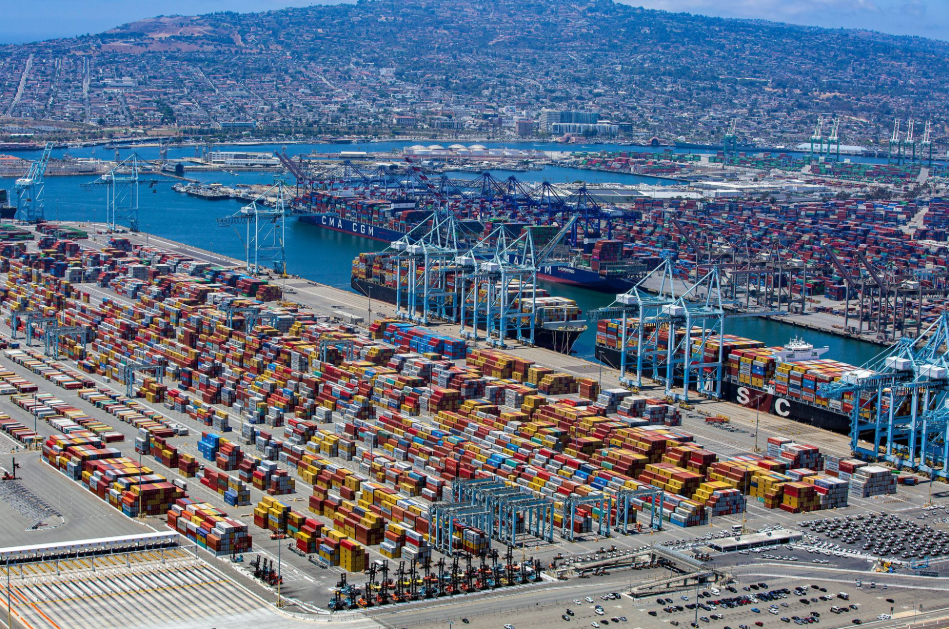
U.S. containerized imports are expected to fall sharply during the first half of 2026 as tariff uncertainty continues to disrupt trade flows, according to the latest Global Port Tracker report released by the National Retail Federation and Hackett Associates.
“With tariffs still a matter of debate in the courts and in Congress, their effect on imports is being clearly seen,” said Jonathan Gold, NRF’s vice president for supply chain and customs policy. “The situation underscores the need for clear and predictable trade policies that support supply-chain certainty, business planning, and consumer affordability. Tariffs are a tax on U.S. businesses that is ultimately paid by consumers through higher prices.”
The report projects that U.S. ports tracked by Global Port Tracker will handle 12.27 million TEU in the first half of 2026, down 2% from 12.53 million TEU during the same period last year. The steepest year-over-year declines are expected in March, down 12%, and April, down 7.1%. May and June are forecast to rebound modestly, with gains of 9.3% and 8%, respectively.
Uncertainty remains elevated as the Supreme Court could rule at any time on the legality of the administration’s use of tariffs under the International Emergency Economic Powers Act. Even if the court strikes down the IEEPA tariffs, analysts warn the administration could impose new duties under other trade authorities, extending the period of uncertainty.
Ben Hackett, founder of Hackett Associates, said tariff policy has driven a “global change in trade relations” that continues to weigh on import volumes. “The continuing use of tariffs against friend and foe alike, combined with uncertainty over when or if they will be implemented, makes trade forecasting very difficult,” he said.
U.S. ports handled 1.99 million TEU in December 2025, down 1.7% from November and down 6.6% year over year, although data from the ports of Houston and Charleston had not yet been reported. For full-year 2025, imports totaled 25.4 million TEU, a 0.4% decline from 2024.
The projected gains in late spring are largely the result of weak comparisons. Imports dropped sharply in May and June 2025 following the announcement of “Liberation Day” tariffs in April of that year.
Those 2025 totals ultimately exceeded earlier expectations. Six months ago, NRF had projected imports could fall as much as 5.6% from 2024 levels as the Liberation Day tariffs weighed on trade.
Hackett has previously described the administration’s approach as “hither-and-thither,” with on-again, off-again tariffs creating confusion throughout the supply chain. “Friends, allies, and foes are all being hit by distortions in trade flows as importers try to second-guess tariff levels by pulling imports forward before duties take effect,” he said.
While the most severe Liberation Day tariffs were ultimately avoided through trade deals, tariff policy volatility has continued to drive swings in import volumes. Adding to the uncertainty in 2025 was the short-lived USTR ship fee plan targeting China-built and China-operated vessels, which took effect in mid-October before being scrapped weeks later as part of a broader U.S.–China trade agreement.
Global Port Tracker covers major U.S. container gateways, including Los Angeles/Long Beach, Oakland, Seattle, and Tacoma on the West Coast; New York/New Jersey, Virginia, Charleston, Savannah, Port Everglades, Miami, and Jacksonville on the East Coast; and Houston on the Gulf Coast.
Mike Schuler