SHANGHAI PORT CONGESTION NEARLY BACK TO NORMAL LEVELS
As Shanghai springs back to life after two months of lockdown, congestion at the port is almost back to normal, according to data from VesselsValue.
SHANGHAI PORT CONGESTION NEARLY BACK TO NORMAL LEVELS
As Shanghai springs back to life after two months of lockdown, congestion at the port is almost back to normal, according to data from VesselsValue.
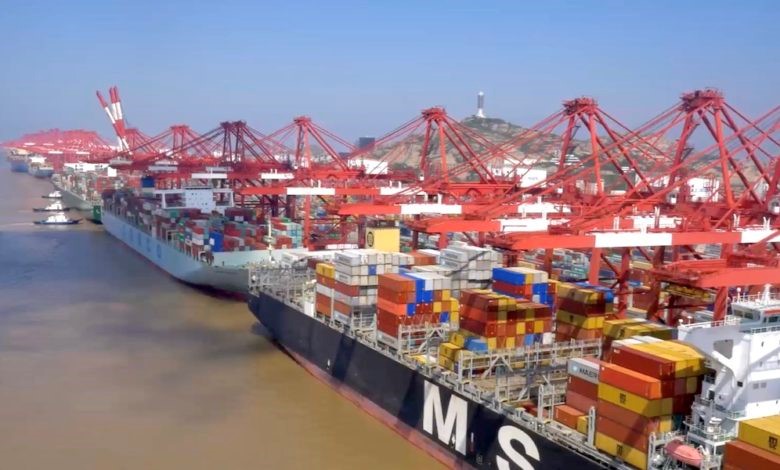
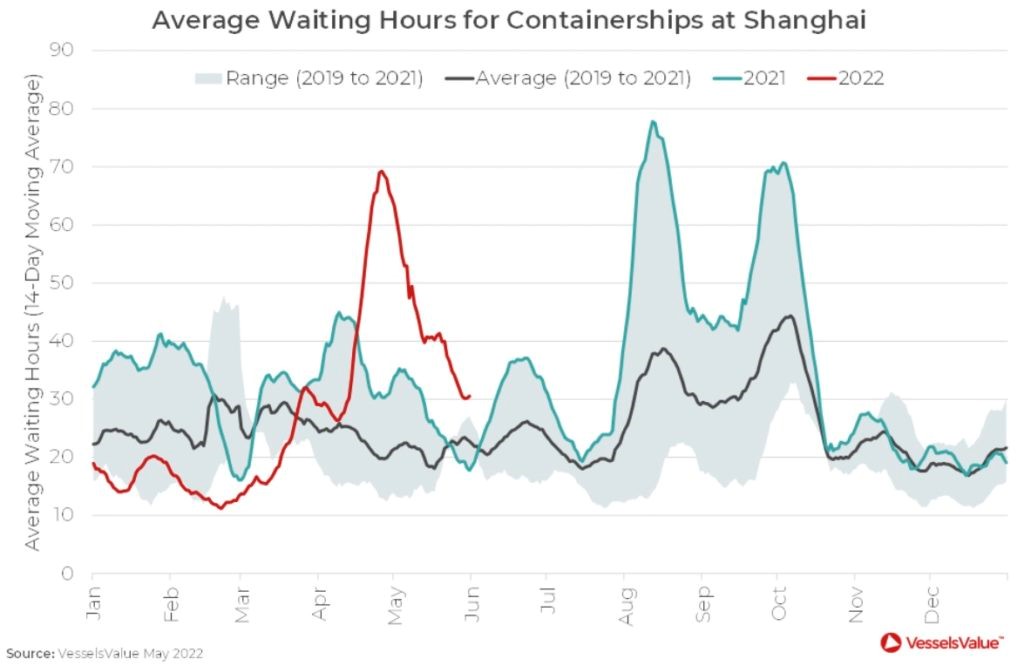
At the height of lockdown in China’s largest city, average waiting times for tankers, bulkers and containerships at Shanghai stretched to 66 hours in late April. Waiting times have now shortened to 28 hours, just an hour longer than the top end of the range seen at this time of year over the past three years.
Average waiting times for containerships, having peaked at 69 hours in late April, are now down to 31 hours, still some four hours longer than the higher end of the range seen for the time of year over the last three years.
Data from Israeli maritime AI firm Windward shows that the length of boxship calls to the port of Shanghai was not critically affected by the lockdown in the city and the ongoing congestion in the area.
Comparing May 2022 to May 2021, Windward’s data shows that the monthly average increased by only 1.2 days, from 17 to 18.2 days, or an increase of 6.9%. But the number of port calls made by container vessels to Shanghai in these two periods dropped 16%, from 1,263 to 1,062.
In terms of the number of vessels currently on their way from Shanghai to Los Angeles and Long Beach, there are currently 29 such vessels with a total carrying capacity of slightly more than 225,000 teu, according to Windward and Sea-Intelligence.
“The Shanghai area is far less congested, which is not surprising, given the relatively new development of the partial re-opening,” a new report from Windward and Sea-Intelligence suggests.
“Assuming that trucking capacity returns to normal, we can expect this to pick up significantly during June, as factories are starved for raw material and a significant number of empty containers will need to be inserted into the Shanghai area supply chain to cater for further increases as the peak season sets in,” the report predicts.
Source: splash247.com by Sam Chambers