
INDIA-EU TRADE DEAL REDRAWS GLOBAL SHIPPING ROUTES
Landmark agreement promises to reshape maritime traffic patterns and vessel deployment strategies as tariff reductions unlock billions in new cargo flows between two economic powerhouses. By Paul Morgan (gCaptain) –...
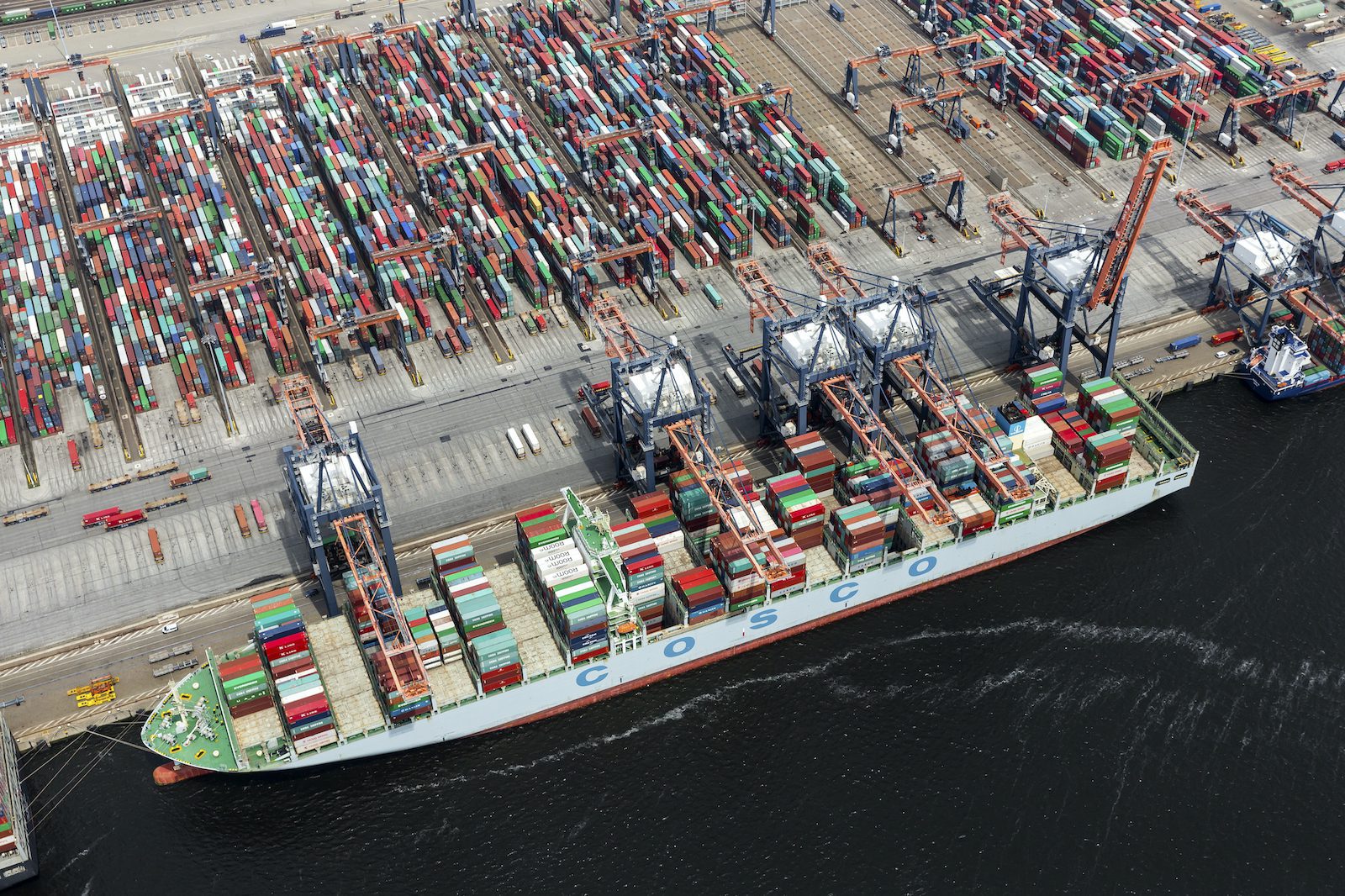
Landmark agreement promises to reshape maritime traffic patterns and vessel deployment strategies as tariff reductions unlock billions in new cargo flows between two economic powerhouses.
By Paul Morgan (gCaptain) – The free trade agreement between India and the European Union, finalised this week after nearly two decades of negotiation, represents far more than diplomatic achievement. For international shipping, the deal marks a fundamental recalibration of one of the world’s most important maritime corridors at a moment when global trade routes are already being reshaped by geopolitical tensions.
Covering a combined market of two billion people and roughly a quarter of global GDP, the agreement will eliminate or reduce tariffs on 97% of EU exports to India and more than 99% of Indian exports to Europe. For shipping, that translates into a sustained increase in containerised cargo, breakbulk machinery movements, and automotive trade across India-Europe lanes that have historically operated below potential due to tariff barriers.
Volume Surge and Route Optimization
Container shipping will feel the most immediate impact. With tariff savings estimated at $4.75 billion annually on EU goods alone, the economic case for moving physical cargo between the regions strengthens considerably. Indian west coast ports—Jawaharlal Nehru Port, Mundra, and Pipavav—are positioned for rapid growth given their proximity to Europe-bound routes. European hubs including Rotterdam, Antwerp, Hamburg, Piraeus, and Valencia stand to capture increased volumes.
Container lines are examining service design implications. The agreement creates conditions for new direct deep-sea services between India and northern Europe, potentially reducing dependence on transshipment through East Asian hubs like Singapore or Colombo. Some carriers may reconfigure existing Asia-Europe loops, adding Indian port calls while trimming Chinese rotations as European importers diversify sourcing away from over-reliance on a single manufacturing centre.
Beyond containers, reduced tariffs on machinery and industrial equipment will boost breakbulk and project cargo movements. Liberalisation in automotive and engineering sectors supports demand for ro-ro carriers and specialised heavy-lift vessels. Even bulk shipping may experience secondary effects as manufacturing shifts alter flows of raw materials and semi-finished goods.
Strategic Trade Repositioning
The agreement’s strategic dimension extends beyond tariff arithmetic. European policymakers have been explicit about reducing dependence on Chinese manufacturing, and this deal positions India as a primary alternative. For shipping lines, that signals a rebalancing of Asia-Europe trade patterns with cargo increasingly sourced from India rather than Chinese ports, fundamentally altering vessel deployment strategies.
This shift could produce significant network effects. India’s role as both manufacturing hub and transshipment gateway may expand, particularly if infrastructure improvements continue at current pace. Ports with strong logistics capabilities, warehousing capacity, and free trade zone facilities are best positioned to capture evolving traffic.
However, timing introduces complexity. The agreement requires ratification before implementation begins, and tariff reductions will be phased over several years. Maritime analysts expect the real transformation from the late 2020s onwards, as tariff schedules deepen and companies re-engineer supply chains around the new framework.
Increased and predictable trade volumes typically support higher vessel utilisation and stable service patterns. Over the medium term, this could place downward pressure on freight rates as capacity aligns better with demand. For shippers, the prospect of lower transport costs and improved schedule reliability represents tangible benefit. For carriers, the challenge lies in balancing competitive pricing against rising fuel costs and environmental compliance expenditures.
The agreement promises operational efficiency gains beyond tariff reductions. Commitments on customs cooperation and regulatory alignment translate into faster cargo clearance, reduced dwell times, and fewer documentation bottlenecks. Ports capitalising on these efficiencies through digital systems and integrated logistics services will gain competitive advantage.
What is the geopolitical context?
The deal arrives against significant geopolitical stress on traditional routes. Security risks in the Red Sea have forced widespread rerouting around the Cape of Good Hope, stretching voyage times and tightening global capacity. Long-term normalisation of Suez transits would amplify the India-EU corridor’s benefits, while renewed disruption could delay its development.
Competitive dynamics add another layer. The India-EU agreement forms part of broader realignment, with India simultaneously pursuing deals with EFTA countries and negotiating with the United Kingdom. Shipping lines must navigate overlapping corridors rather than relying on dominant routes. Flexibility in fleet deployment becomes increasingly valuable.
Not all sectors benefit equally. Sensitive agricultural areas remain partially excluded, limiting growth in certain bulk and reefer trades. Implementation risks persist around regulatory enforcement and potential political changes. Yet the direction is clear: both India and the EU have committed to long-term economic integration, and maritime transport will serve as a primary enabler.
Likely winners include carriers with established India exposure and flexible networks, ports handling higher volumes efficiently with integrated logistics, and freight forwarders providing end-to-end supply chain management. Potential losers are those slow to adapt, over-invested in declining lanes, or unable to meet compliance and service expectations.
For maritime, the agreement reinforces a fundamental shift. Global shipping is no longer shaped primarily by economic cycles but increasingly by geopolitics and trade policy. The India-EU deal is about building supply chain resilience and redistributing maritime traffic across diversified routes and hubs.
As the agreement moves through ratification, its full shipping implications will take years to materialise. But the strategic direction is evident. The India-Europe maritime corridor is positioned to become one of the defining trade routes of the next decade, marking a decisive shift in global shipping geography and creating both opportunity and disruption for carriers, ports, and logistics providers navigating this new landscape.
Paul Morgan